





Introducing the ECAL Portable Indirect Calorimeter
Metabolic Profiling Through Breath Analysis - Measure Your Metabolism, Not Just Your Body

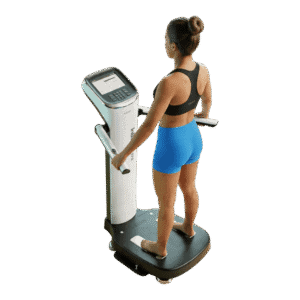
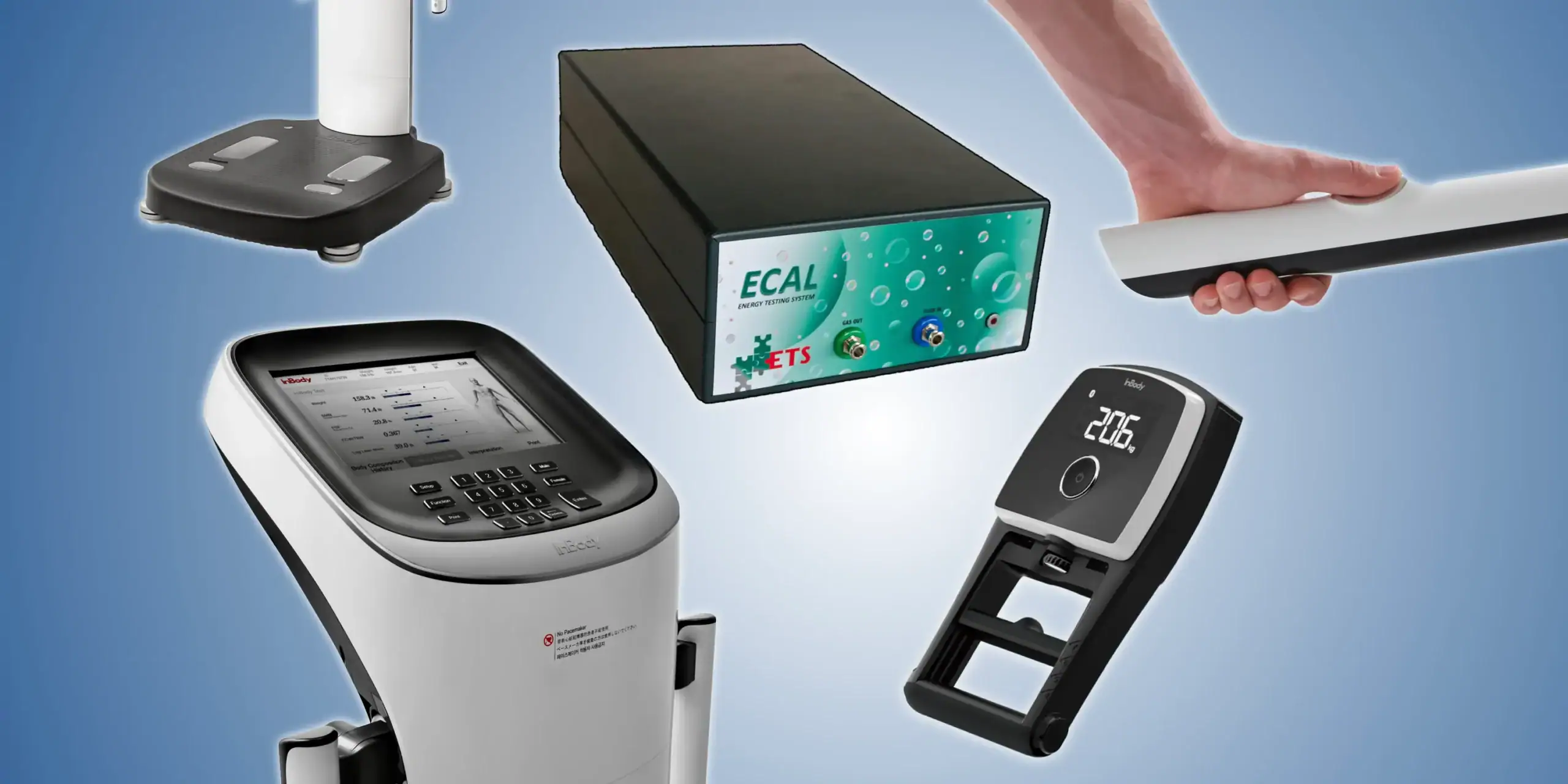
Your InBody 970 scan reveals what your body is made of. The ECAL reveals how it runs. This Australian designed portable indirect calorimeter measures your resting metabolic rate, fat and carbohydrate burning ratios and cellular efficiency through a simple breath test. Together, body composition and metabolic profiling give you a more complete picture that neither test can deliver alone.
WHAT is the ECAL?
ECAL stands for Electronic indirect CALorimeter. It is a portable, medical-grade metabolic monitor designed and manufactured by Metabolic Health Solutions (MHS) in Perth, Western Australia. MHS is an ISO 13485 certified manufacturer, and the ECAL is a registered medical device in Australia (TGA), Europe (CE) and the United Kingdom (UKCA).
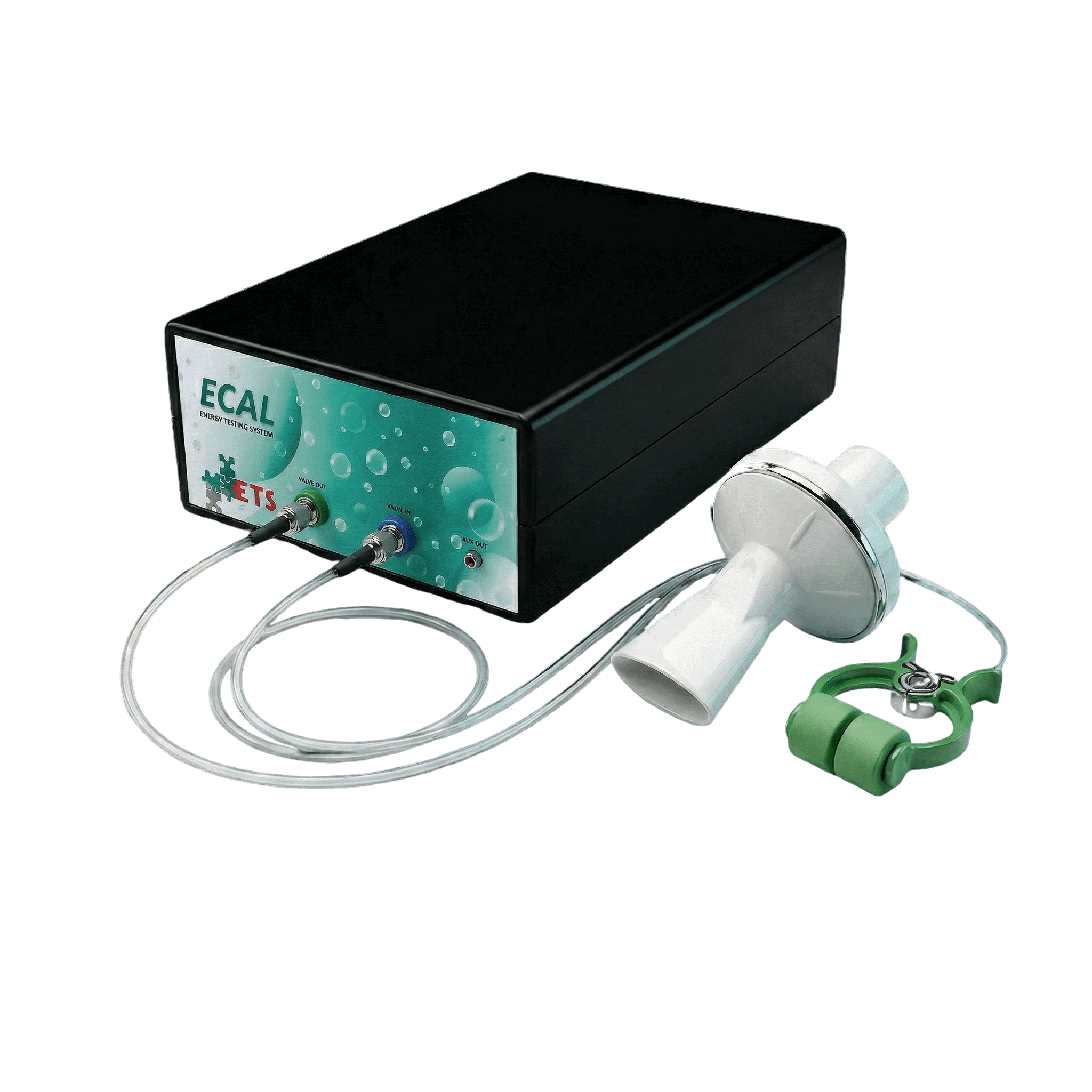
Indirect calorimetry is the clinical standard for measuring human metabolism. The technology has been used in hospital metabolic labs and sport science departments for decades, but the equipment was traditionally large, expensive and required specialist technicians to operate. The ECAL changed that. MHS engineered the same measurement principles into a portable, shoebox-sized device built specifically for clinical practice.
The ECAL analyses the oxygen you breathe in and the carbon dioxide you breathe out during a short resting breath test. From this gas exchange data, it calculates exactly how many calories your body burns at rest, what fuel source that energy is coming from and how efficiently your cells are producing it. These are measurements that no blood test, no body scan and no online calculator can provide.
Where the InBody 970 maps your body composition in precise detail, the ECAL answers the next question: what is your body actually doing with the fuel you give it? Together, they form the foundation of everything we do at Get Scanned.
HOW the ECAL Works
The ECAL uses four core measurement principles to build your metabolic profile directly from your breath.
Measuring Gas Exchange
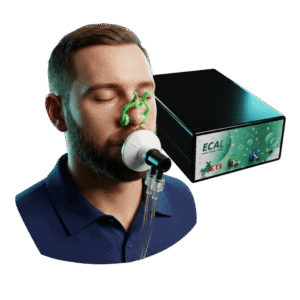
During a five to eight minute resting breath test, you breathe through a comfortable mouthpiece with a soft nose clip. The ECAL analyses every breath cycle, measuring inspired and expired oxygen, expired carbon dioxide, ventilation volumes and flow rates. This continuous breath-by-breath gas exchange data is the raw material from which your metabolic profile is calculated.

Oxygen Consumption (VO₂)
The ECAL measures how much oxygen your body consumes using a galvanic fuel cell oxygen sensor. Oxygen is the raw material your cells need to convert stored fuel into energy. The rate at which you consume it determines your resting metabolic rate.

Carbon Dioxide Production (VCO₂)
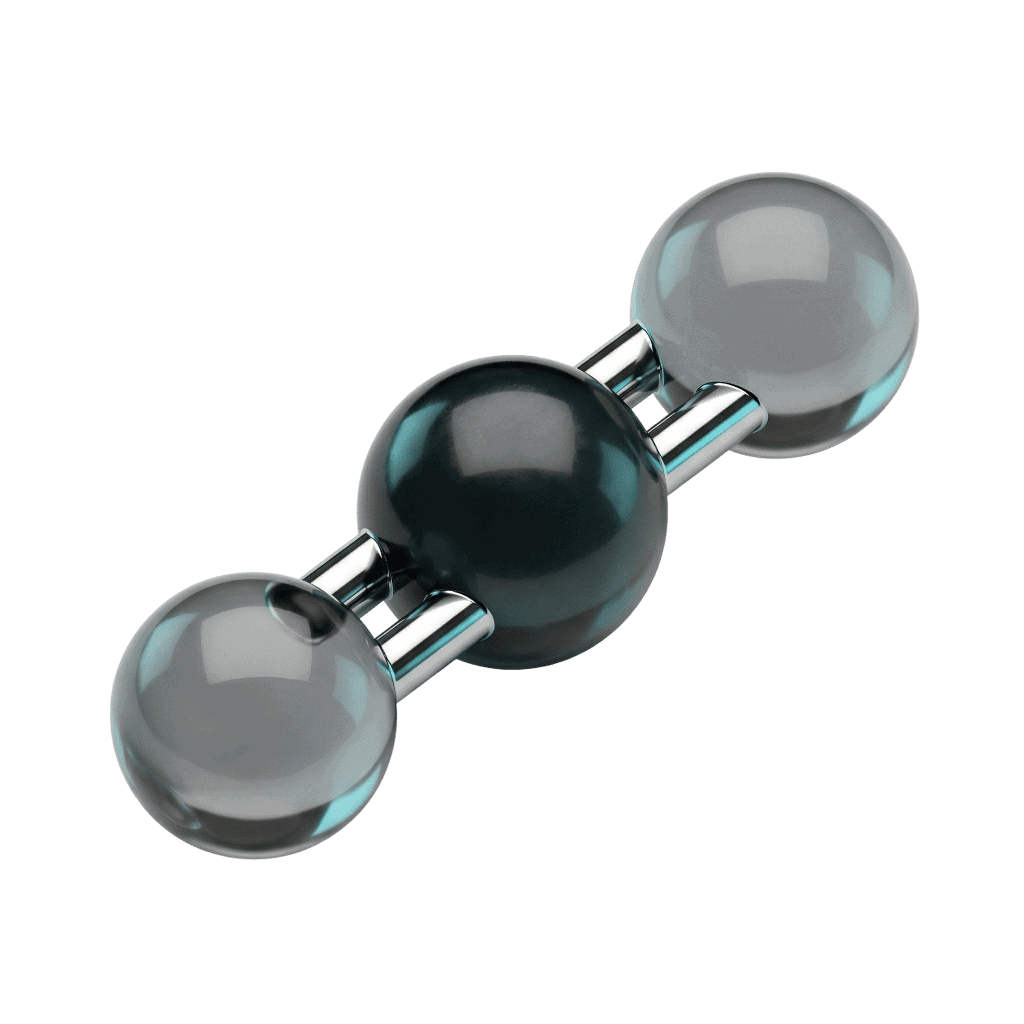
A patented non-dispersive near-infrared (NDIR) absorption sensor measures the carbon dioxide in your exhaled breath. CO₂ is the byproduct of energy production. The amount you produce, relative to the oxygen you consume, reveals which fuel source your body is burning.
The Calculations
Using the Weir equation, an established physiological formula, the ECAL converts your VO₂ and VCO₂ measurements into precise values for resting energy expenditure, respiratory quotient and substrate utilisation. No estimation. No population averages. Your metabolism, measured directly from your breath.

WHAT Makes It Clinical-Grade?
The ECAL is not a consumer wellness gadget. It is a registered medical device, manufactured under ISO 13485 quality management standards and listed on the Australian Register of Therapeutic Goods (TGA), the European CE register and the UK UKCA register. The same regulatory frameworks that govern hospital diagnostic equipment govern the ECAL.
The device has been independently validated against reference-standard laboratory calorimeters. A study at Oxford Brookes University compared the ECAL against the Deltatrac II, the established benchmark in indirect calorimetry, and found no significant difference in mean resting metabolic rate measurements. A separate validation at Cambridge compared ECAL against the QUARK RMR system with similar results. The University of Liverpool used the ECAL in a 24-week randomised controlled trial involving participants with class 3 obesity, demonstrating that personalised metabolic biofeedback improved weight loss outcomes compared to standard care alone.
Most people have never had their metabolism measured. Instead, they rely on predictive equations like Harris-Benedict or Mifflin-St Jeor, formulas that estimate metabolic rate from age, height, weight and sex. These equations are based on population averages and have been shown to over or underestimate individual metabolic rate by as much as 20 to 30 percent. For anyone with an unusual body composition, hormonal variation or metabolic condition, that margin of error can be the difference between a plan that works and one that fails. The ECAL eliminates the guesswork entirely by measuring your metabolism directly.
WHAT the ECAL Measures
Every ECAL test produces a detailed metabolic report. The key measurements we assess and explain in your consultation are:
Resting Energy Expenditure (REE)
The number of calories your body burns at rest to maintain basic biological functions: breathing, circulation, cell repair, brain activity and temperature regulation. This is your metabolic baseline and the single most important number for building an accurate nutrition plan. The ECAL measures it directly rather than estimating it from a formula.

Respiratory Quotient (RQ)
The ratio of carbon dioxide produced to oxygen consumed. RQ reveals which fuel source your body is prioritising. A value closer to 0.70 indicates predominantly fat burning. A value closer to 1.00 indicates predominantly carbohydrate burning. Most people at rest should sit somewhere between 0.75 and 0.85, favouring fat as their primary fuel source.

Fat and Carbohydrate Oxidation
Building on your RQ, the ECAL calculates the exact percentage split between fat and carbohydrate being used for energy production. Ideally, a fasted resting body should derive around 80 percent of its energy from fat. When this ratio is skewed toward carbohydrate, it can indicate metabolic inflexibility, insulin resistance or dietary imbalance. This is actionable data that a qualified practitioner can use to adjust your nutrition strategy.
Cellular Efficiency
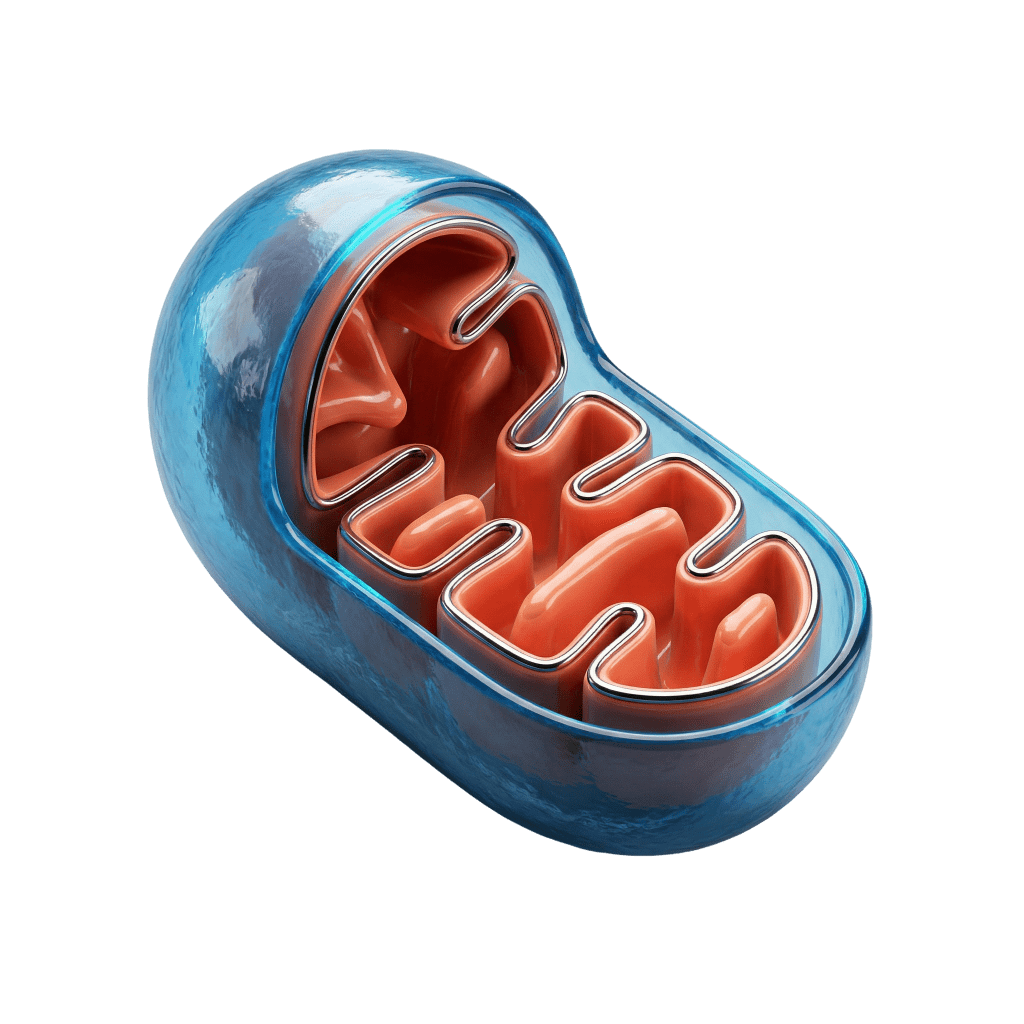
The ECAL assesses how efficiently your mitochondria, the energy-producing structures within every cell, are oxidising stored fuel into usable energy. Poor cellular efficiency can present as chronic fatigue, sluggish recovery and difficulty losing weight, even when calorie intake and exercise appear correct. This measurement provides insight that no other test outside a metabolic lab can offer.
WHO Uses Indirect Calorimetry?
Indirect calorimetry has been used in clinical and research settings for decades. The ECAL makes the same technology accessible in everyday practice.
Weight management. Knowing your actual resting metabolic rate removes the single biggest variable in any weight loss or weight gain plan. No more guessing calorie targets from generic formulas. Practitioners can set energy prescriptions based on measured data and track metabolic adaptation over time.
Bariatric surgery. Metabolic rate changes significantly before and after surgical intervention. Pre-operative metabolic profiling establishes a true baseline, and post-operative retesting helps clinicians adjust nutritional support as the body adapts to rapid compositional change.
Diabetes and metabolic syndrome. A skewed RQ and impaired fat oxidation are hallmarks of insulin resistance and metabolic inflexibility. The ECAL provides objective data that helps practitioners identify these patterns early and monitor improvement in response to dietary, exercise and medical interventions.
Sports performance. Athletes and coaches use metabolic data to fine-tune fuelling strategies for training and competition. Understanding resting substrate utilisation helps optimise body composition targets without compromising energy availability or recovery.
Dietetic and clinical nutrition practice. Accredited practitioners use measured REE as the foundation for evidence-based meal planning. Predictive equations are a starting point at best. Measured metabolic data elevates the standard of care.
Research. Universities and clinical trials use indirect calorimetry as a validated methodology for studying energy balance, obesity interventions and metabolic disease. The ECAL has been used in published peer-reviewed research across multiple institutions.
The ECAL test at Get Scanned
At Get Scanned, every ECAL test is conducted alongside an InBody 970 body composition scan. Metabolic data without body composition context is only half the picture. Your resting metabolic rate, substrate utilisation and cellular efficiency all become significantly more meaningful when layered over precise measurements of muscle mass, body fat and visceral fat. The InBody also produces a basal metabolic rate derived from your lean mass, which shifts only as your lean mass shifts, so reading it alongside your measured resting rate separates a real metabolic change from normal day to day variation. Together, these two clinical-grade assessments provide a more complete physiological profile that neither test can deliver on its own.
Steve personally conducts every ECAL test and interprets every result. This is not a self-service kiosk or a printout handed over without explanation. Each session includes a detailed walkthrough of your metabolic report: what your resting energy expenditure means in practical terms, what your RQ and substrate utilisation reveal about how your body is handling fuel, and what your cellular efficiency suggests about mitochondrial function.
Where appropriate, Steve will provide broad guidance on what the numbers indicate and how they connect to your body composition results. For clients who need specific dietary or medical prescriptions, we prepare a referral with your full results for you to take to a dietitian, nutritionist or your treating medical professional.
The ECAL travels with the Scan-Van to every location across Melbourne and regional Victoria. Same device, same depth of consultation, same clinical standard, wherever you are.
FAQ about the ECAL
The ECAL measures your resting energy expenditure (how many calories you burn at rest), your respiratory quotient (the ratio of carbon dioxide produced to oxygen consumed), your fat and carbohydrate oxidation ratios (which fuel source your body is prioritising) and your cellular efficiency (how effectively your mitochondria convert fuel into energy).
The breath test itself takes five to eight minutes. Allow additional time for setup, settling your breathing and a full explanation of your results afterwards. An appointment for an ECAL test with an InBody scan will normally take approximately 40 minutes.
No. You sit in a relaxed, reclined position and breathe normally through a mouthpiece with a soft nose clip. There are no needles, no exertion and no discomfort. We allow a few minutes of practice breathing before starting the test.
Online calculators use predictive equations based on your age, height, weight and sex. These are population averages that have been shown to over or underestimate individual metabolic rate by 20 to 30 percent. The ECAL measures your actual gas exchange and calculates your personal metabolic rate directly. There is no estimation involved.
Yes. Every ECAL test is conducted alongside an InBody 970 body composition scan in a single session. Metabolic data and body composition data are far more useful read together than apart, so we do not run the ECAL on its own. Book through our scheduling page.
Yes. You should fast for a minimum of four hours before your ECAL test, though an overnight fast of 10 to 12 hours produces the most accurate resting results. Full preparation instructions are available on our Preparing for ECAL page.
Yes. The ECAL is a TGA registered medical device in Australia, CE marked in Europe and UKCA certified in the United Kingdom. It is manufactured by Metabolic Health Solutions in Perth under ISO 13485 quality management certification. The ECAL has been independently validated against reference-standard calorimeters in peer-reviewed research.
Anyone who wants to understand their metabolism rather than guess at it. The ECAL is particularly valuable for people managing weight loss or gain, athletes optimising fuelling strategies, individuals with metabolic conditions such as diabetes or insulin resistance, and anyone who has tried calorie-based plans that have not delivered the expected results.
ECAL Metabolic Testing Overview
What the ECAL is
ECAL stands for Electronic indirect CALorimeter. It is a portable medical-grade metabolic monitor designed and manufactured by Metabolic Health Solutions in Perth, Western Australia, an ISO 13485 certified manufacturer. The ECAL is a registered medical device in Australia with the TGA, in Europe with CE marking, and in the United Kingdom with UKCA. Indirect calorimetry is the clinical standard for measuring human metabolism and has been used in hospital metabolic labs and sport science departments for decades, but the equipment was traditionally large, expensive and required specialist technicians. The ECAL puts the same measurement principles into a shoebox-sized device built for clinical practice.
How it works
During a five to eight minute resting breath test, the client breathes through a mouthpiece with a soft nose clip. The ECAL analyses every breath cycle, measuring inspired and expired oxygen, expired carbon dioxide, ventilation volumes and flow rates. Oxygen consumption is measured with a galvanic fuel cell sensor, and carbon dioxide production with a patented non-dispersive near-infrared absorption sensor. Using the Weir equation, an established physiological formula, those measurements are converted into resting energy expenditure, respiratory quotient and substrate utilisation. Nothing is estimated from population averages.
Why measured beats estimated
Most people have never had their metabolism measured and instead rely on predictive equations such as Harris-Benedict or Mifflin-St Jeor, which estimate metabolic rate from age, height, weight and sex. Those equations are built on population averages and can over or underestimate an individual's metabolic rate by as much as 20 to 30 percent. For anyone with unusual body composition, hormonal variation or a metabolic condition, that margin can be the difference between a plan that works and one that fails. The ECAL has been independently validated against reference-standard laboratory calorimeters, including a comparison against the Deltatrac II at Oxford Brookes University that found no significant difference in mean resting metabolic rate, and a comparison against the QUARK RMR system at Cambridge with similar results.
What it measures
Resting energy expenditure, the calories burned at rest to maintain breathing, circulation, cell repair, brain activity and temperature regulation. This is the metabolic baseline and the foundation of any accurate nutrition plan. Respiratory quotient, the ratio of carbon dioxide produced to oxygen consumed, which reveals fuel preference: closer to 0.70 indicates predominantly fat burning, closer to 1.00 indicates predominantly carbohydrate burning, with most people at rest sitting between 0.75 and 0.85. Fat and carbohydrate oxidation, the exact percentage split of energy coming from each fuel, where a skew toward carbohydrate can indicate metabolic inflexibility, insulin resistance or dietary imbalance. And cellular efficiency, how effectively mitochondria are oxidising stored fuel, which can explain chronic fatigue, sluggish recovery and difficulty losing weight when intake and exercise appear correct.
Who uses indirect calorimetry
Weight management, where a measured resting metabolic rate removes the largest variable in any energy prescription and allows metabolic adaptation to be tracked over time. Bariatric surgery, where pre-operative profiling establishes a true baseline and post-operative retesting guides nutritional support through rapid compositional change. Diabetes and metabolic syndrome, where a skewed respiratory quotient and impaired fat oxidation are hallmarks of insulin resistance. Sports performance, where resting substrate utilisation informs fuelling strategy and body composition targets without compromising recovery. Dietetic and clinical nutrition practice, where measured resting energy expenditure replaces predictive equations as the basis for meal planning. And research, where indirect calorimetry is a validated methodology for studying energy balance, obesity interventions and metabolic disease.
The ECAL test at Get Scanned
Get Scanned always pairs the ECAL with an InBody 970 body composition scan, because metabolic data without body composition context is half the picture. Resting metabolic rate, substrate utilisation and cellular efficiency all become more meaningful layered over precise measurements of muscle mass, body fat, visceral fat and other metrics. The InBody also produces a basal metabolic rate derived from lean mass, which shifts only as lean mass shifts, so reading it alongside the measured resting rate separates a real metabolic change from day to day variation. Steve Burden conducts every ECAL test and interprets every result, with a detailed walkthrough of what the numbers mean in practical terms. Where a client needs specific dietary or medical prescriptions, Get Scanned prepares a referral with the full results to take to a dietitian, nutritionist or treating medical professional. The ECAL travels with the Scan-Van to every location across Greater Melbourne and regional Victoria.